

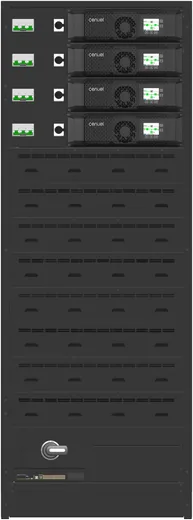
CAB-SP060-I080-2S-A1
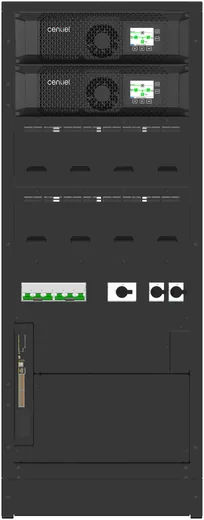
- Internal batteries
- 80 × 9 Ah
- Max. power
- 60 kW
UPS batteries
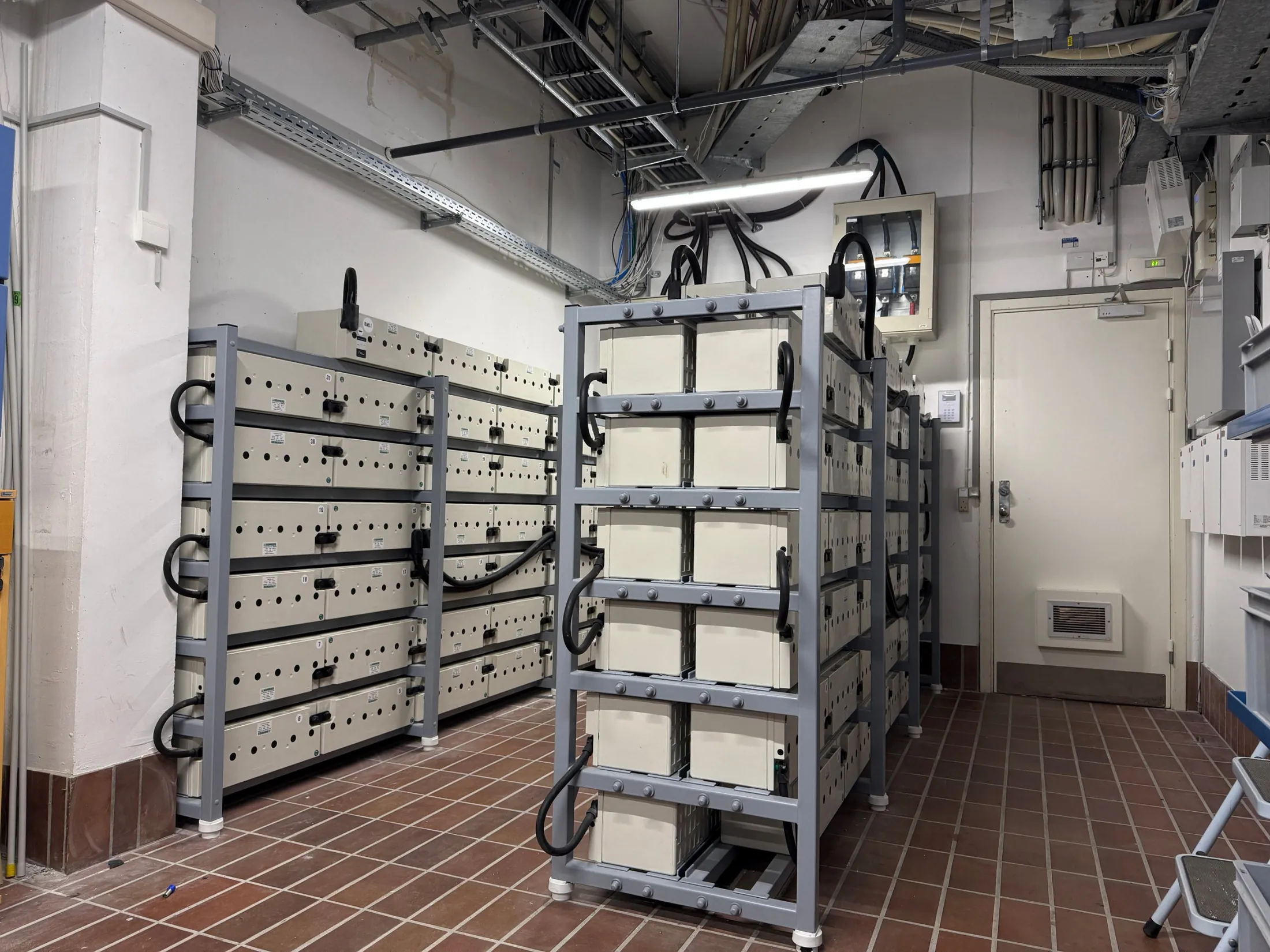
Internal batteries when the autonomy can be reached with the space in the UPS cabinet. A battery cabinet when the batteries must stand by the UPS system in a room other people also use. A battery rack when the battery bank is large and can stand in a locked battery room.
Quick answer
Where a UPS system's batteries should go depends on three things: the autonomy required by the contingency plan, the space by the UPS system and who has access to the room.
The table shows the differences. Not sure what your system needs? Enter your load and required autonomy in the UPS selector and get a price for the complete system.
| Internal batteries | Battery cabinet | Battery rack | |
|---|---|---|---|
| Location | Inside the UPS cabinet | Closed steel cabinet next to the UPS system | Open frame in a separate battery room |
| Best for | Autonomy that can be reached with the blocks in the UPS cabinet | Rooms that other people also use | Long autonomy and large battery blocks |
| Floor space | None extra | One or more cabinets by the UPS system | Most, including the aisle in front of the racks |
| Access | Behind the UPS doors | Closed, locked cabinet | Locked room for instructed personnel only |
| Expansion | Free battery slots in the cabinet only | More cabinets | More or longer racks |
How to choose
The location follows from the battery bank the system needs. That is why we always work in the same order.
Autonomy from the contingency plan. The contingency plan sets how long the UPS system must carry the load – for example until the generator has taken over or the equipment has been shut down in a controlled way.
The battery bank. Load and autonomy give the number of strings and the block size. If they fit in the UPS cabinet, internal batteries are the simplest option.
The room. If the batteries must stand by the UPS system where other people also work, it becomes a locked battery cabinet. If the bank is large or the blocks are heavy, it becomes racks in a locked battery room.
Internal batteries
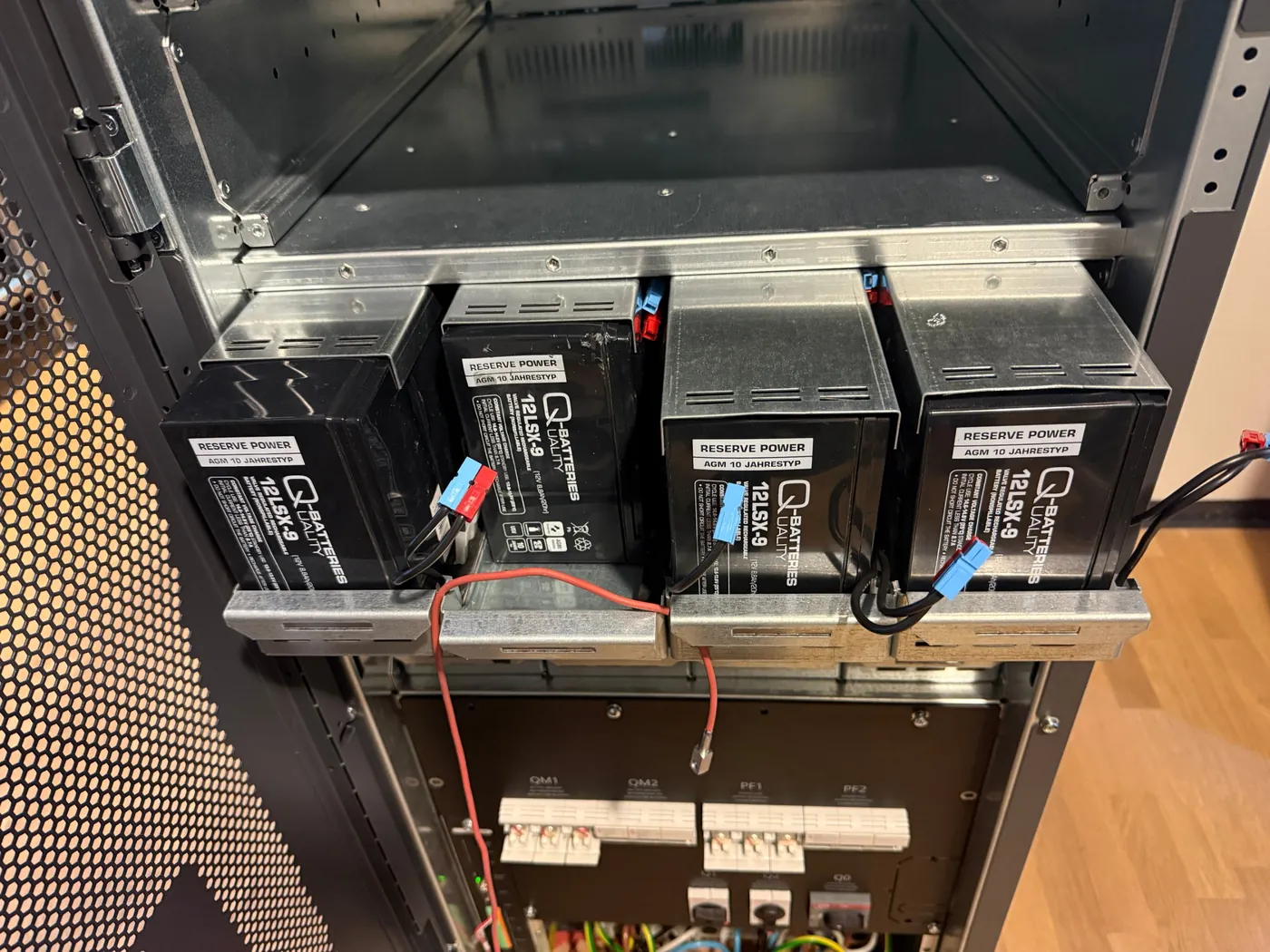
Many UPS systems come in a version with battery slots in the same cabinet as the modules. It is the most compact solution, but the autonomy is limited by the number of slots.
Rack or cabinet
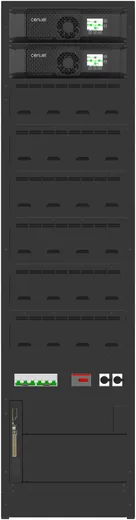
If the batteries are to stand outside the UPS system, the choice is between a closed battery cabinet and an open battery rack. Both carry the same battery blocks. The difference is how the blocks are protected, how many there is room for and where they may stand.
| Battery cabinet | Battery rack | |
|---|---|---|
| Construction | Closed steel cabinet with doors and lock | Open frame on several tiers |
| Location | Next to the UPS system, also in rooms other people use | In a locked battery room |
| Protection | The cabinet protects against contact | The room and its lock protect against contact |
| Capacity | Fixed number of blocks per cabinet | Built to the block and the length of the room |
| Large blocks | Limited by the cabinet's dimensions | Also large and heavy blocks |
| Installation | Delivered as a cabinet and tilted into place | Assembled in the room |
| Expansion | One more cabinet | A longer rack or one more rack |
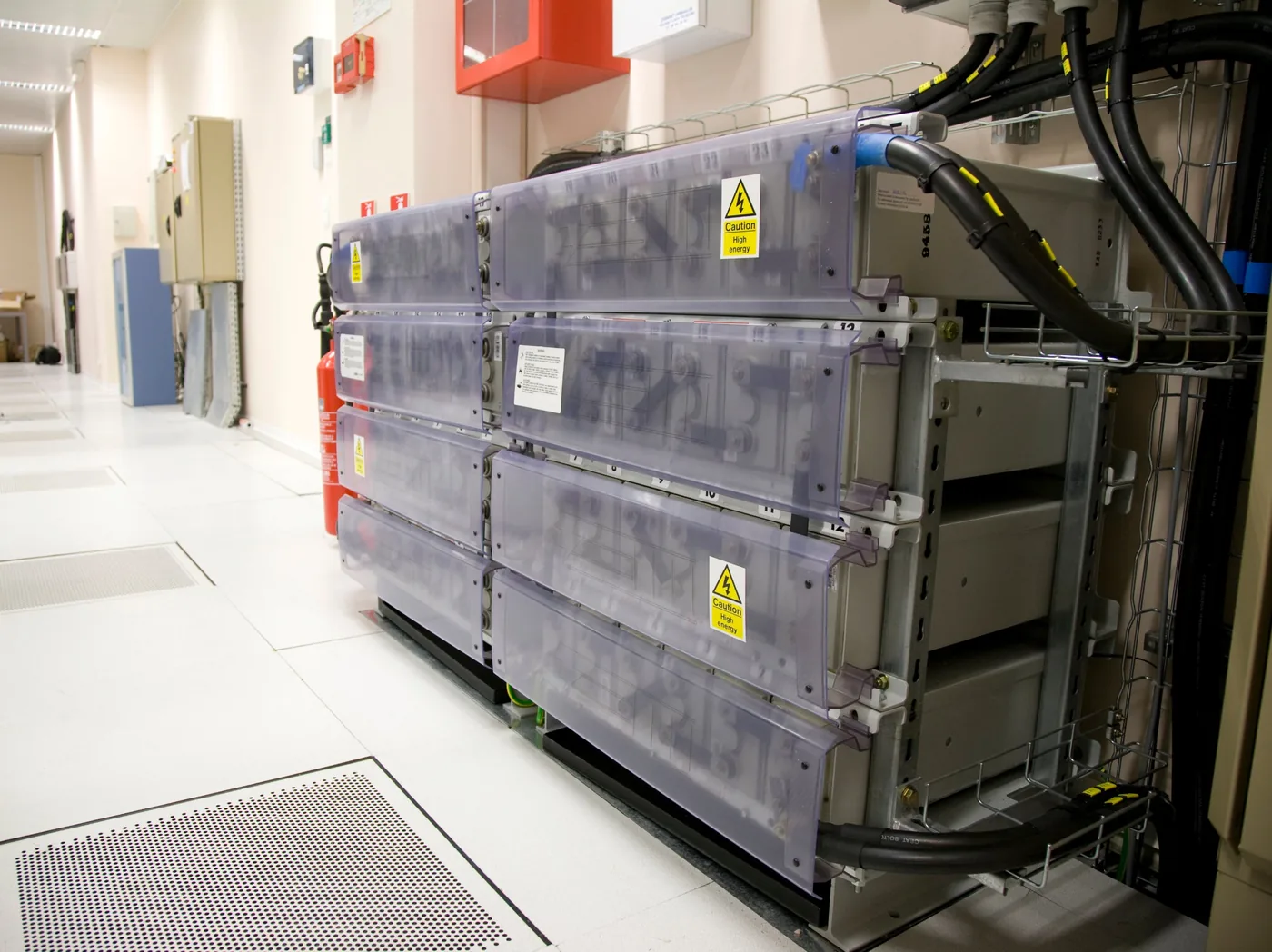
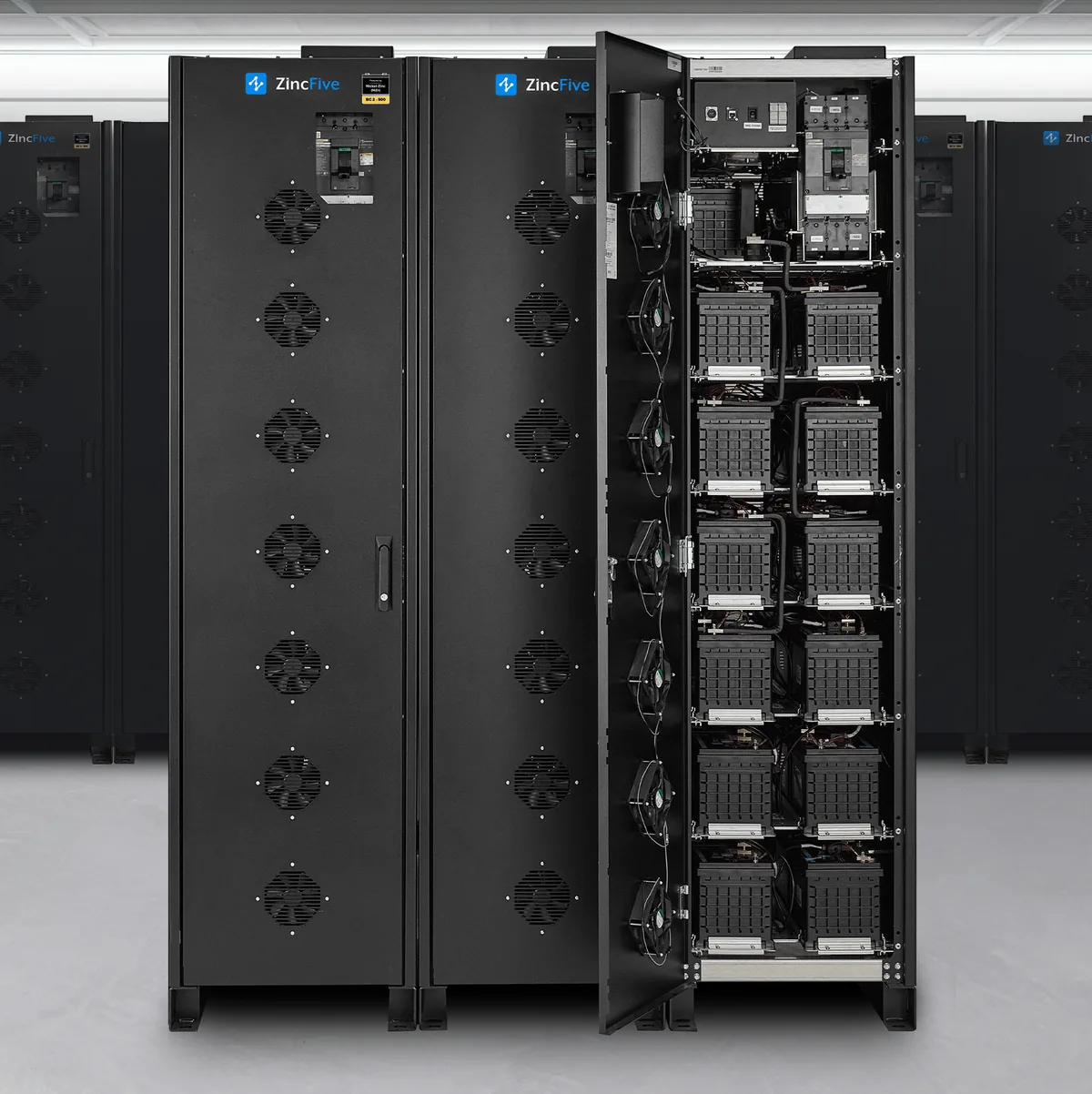
Closed, lockable steel cabinets that stand right next to the UPS system – even in rooms other people use. We have pre-calculated almost 1,900 cabinet sizes for 158 battery types from 1 to 12 strings, and if no standard cabinet fits, we build it to measure. Complete nickel-zinc and lithium systems too.
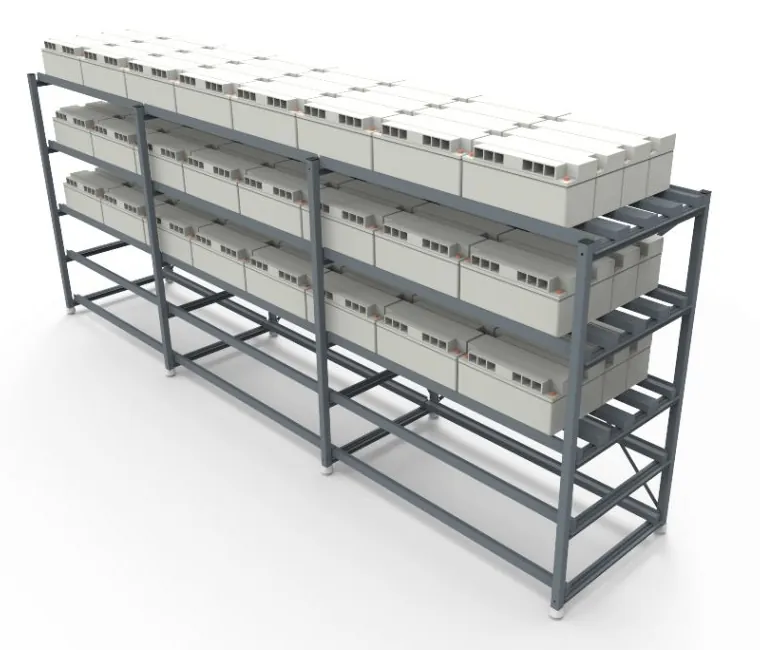
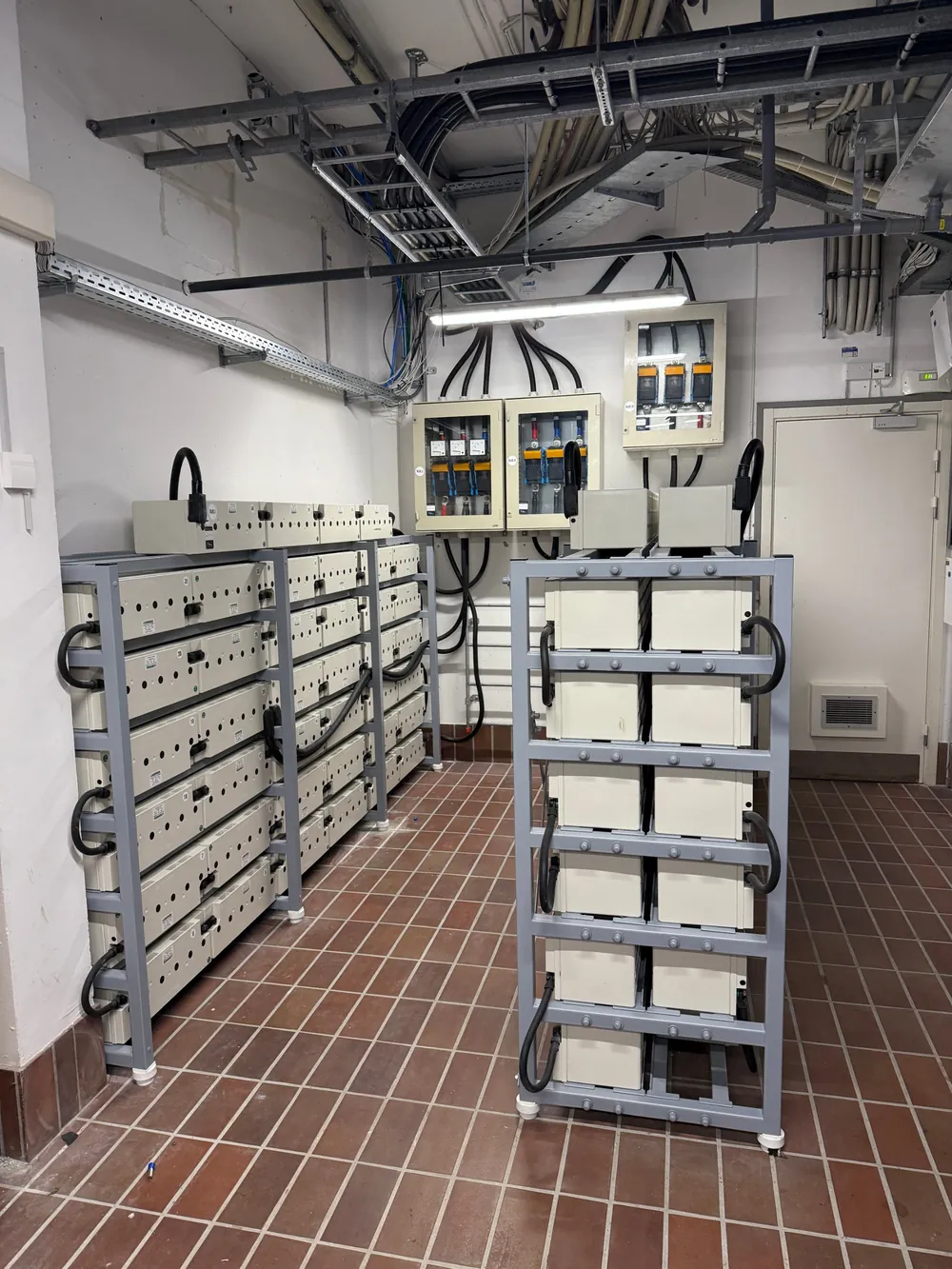
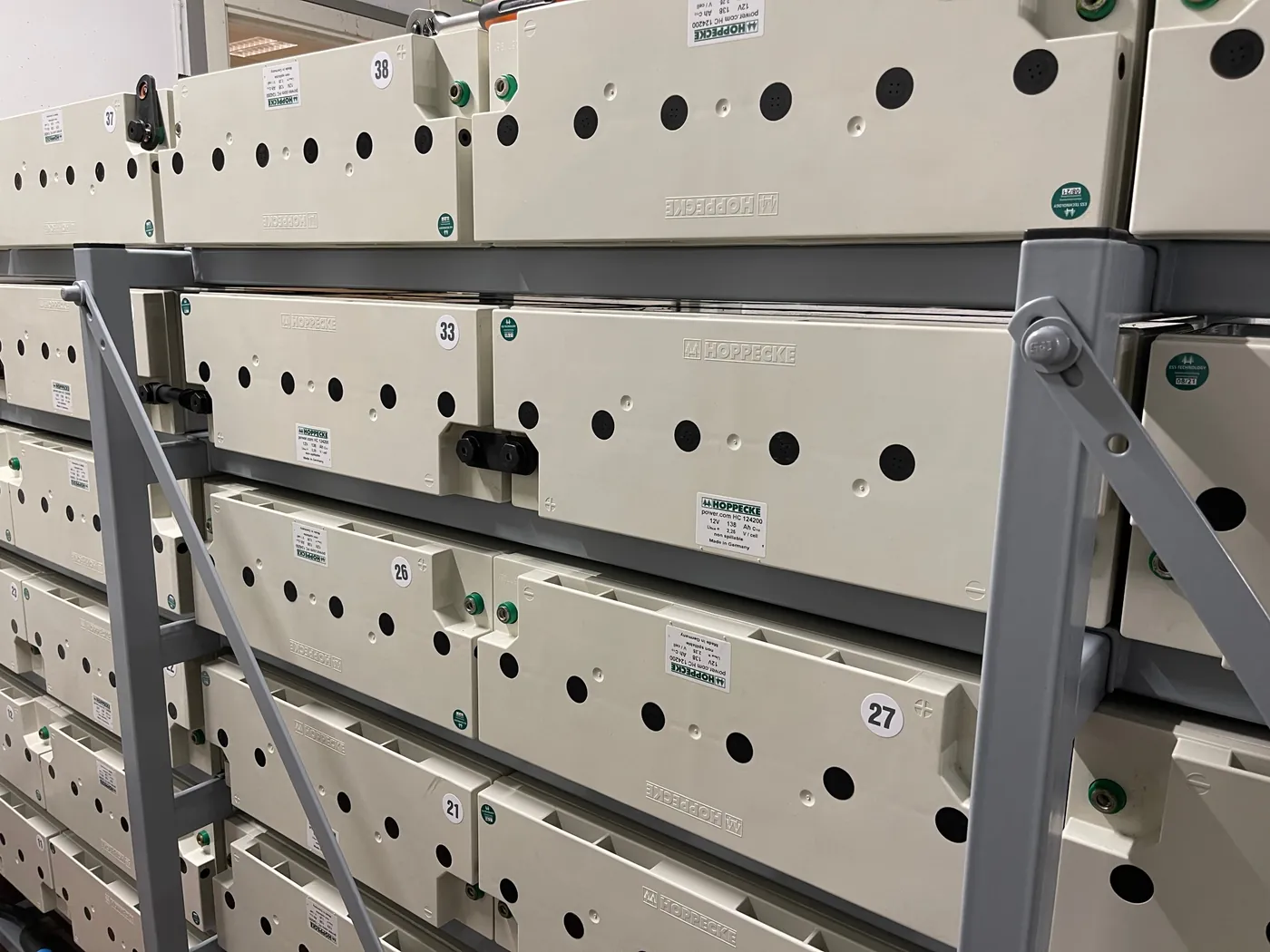
Steel racks built for the chosen block and the room’s dimensions – on one or several tiers and up to 15 m in one rack. More than 9,700 pre-calculated variants for 157 battery types from 1 to 12 strings, including the largest and heaviest blocks.
Room and safety
EN IEC 62485-2 is the European standard for the safety of stationary batteries. It applies to both cabinets and racks and determines where the batteries may stand and how much air the room must have.
| Requirement | What it means |
|---|---|
| Restricted access above 120 V DC | Batteries above 120 V DC must be located with restricted access, secured by a lock. A string of 40 blocks of 12 V is at about 480 V DC. |
| Touch voltage | A nominal touch voltage of 120 V DC must not be exceeded. |
| Ventilation | The airflow is calculated as Q = 0.05 × n × Igas × Crt × 10⁻³ m³/h. Three strings of 40 blocks of 100 Ah (720 cells) on float charge of VRLA give about 3.6 m³/h. |
| Maintenance in sections | Batteries above 120 V DC should be divisible into sections of no more than 120 V DC when work is carried out on them. |
| Working distances | The standard sets working distances in battery rooms, so the racks must be planned with space in front of the blocks. |
| Lithium-ion | IEC 62485-5 applies to stationary lithium-ion batteries. |
Batteries are heavy. Under the Danish national annex to Eurocode 1, an office floor is designed for an imposed load of 2.5 kN/m², while the load under a full battery cabinet can be more than ten times higher. We state the calculated floor load for the chosen solution so an engineer can assess the floor before the system is installed.
Battery design life is stated per Eurobat at 20 °C and halves for every 10 °C the temperature is constantly above that. The room must therefore be kept cool – whether the batteries are in a cabinet or on racks.
Temperature and service lifeOur sizing
Whatever the location, we size the batteries on the same principles, so the system can be serviced and expanded without compromising the autonomy.
FAQ
A battery cabinet is a closed steel cabinet with doors and a lock that can stand next to the UPS system, also in rooms other people use. A battery rack is an open frame where the battery blocks are freely accessible, so the rack must stand in a locked battery room. The cabinet suits small and medium battery banks; the rack suits large banks and heavy blocks.
When the required autonomy can be reached with the blocks that fit inside the UPS cabinet. A Centiel StratusPower cabinet with room for 80 blocks of 28 Ah gives, for example, about 55 minutes at 20 kW, but considerably less at full load. If the contingency plan requires longer, a battery cabinet or battery rack is connected.
Not always. EN IEC 62485-2 requires batteries with a nominal voltage above 120 V DC to be located with restricted access, secured by a lock. A UPS system with 40 blocks of 12 V per string is at about 480 V DC. The batteries must therefore be either in a locked cabinet or on racks in a locked battery room.
EN IEC 62485-2 calculates the required airflow as Q = 0.05 × n × Igas × Crt × 10⁻³ m³/h, where n is the number of cells, Igas is the gas-producing current per Ah and Crt is the capacity in Ah. Three strings of 40 blocks of 100 Ah (720 cells) on float charge of VRLA batteries give about 3.6 m³/h. On boost charge the gas current is higher.
It has to be assessed case by case. Under the Danish national annex to Eurocode 1, an office floor is designed for an imposed load of 2.5 kN/m² (about 255 kg/m²). Under a full battery cabinet the load can be more than ten times higher. We state the calculated floor load for the chosen solution so an engineer can assess the floor.
We design with at least 2 and preferably 3 strings of 40 blocks. One string can then be taken out for service or replacement while the others still give the system battery time.
With battery cabinets and battery racks: yes, with more cabinets or a longer rack. Internal batteries can only be expanded as long as there are free battery slots in the UPS cabinet. We size cables, fuses and switchboards for the system's full capacity, so an expansion does not require rebuilding the installation.
The UPS selector
Enter your load and required autonomy in the UPS selector. We size the batteries and choose internal batteries, cabinet or rack to suit your room.