Service and maintenance · 24/7/365
Service plans for generator sets
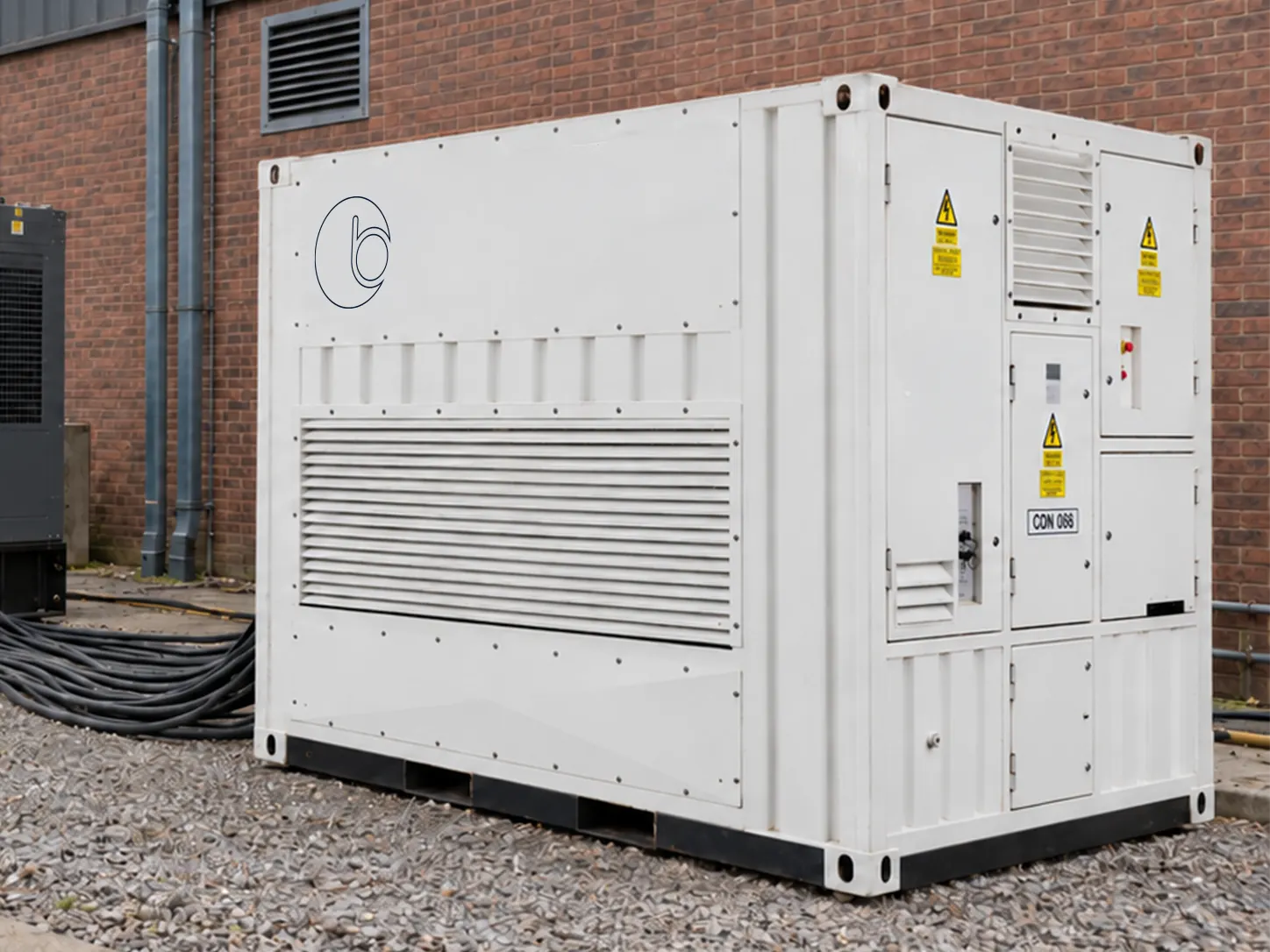
A generator set stands idle most of the year and must start the first time the mains fails. We keep it ready with regular services, load bank testing and a response time that suits your operations. Reports and running hours are collected on your page at Bluecircle.
Reliability
When the mains fails, the whole chain must work
A generator standing idle does not show its faults. They arise in the starting system, the fuel, the cooling and the transfer – and are only discovered when the set is needed. The service agreement is built around the links that make a standby power system fail.
| Link | Typical fault | What we check |
|---|---|---|
| Starting system | Starter batteries with too little capacity, a faulty charger or missing pre-heating | Starter batteries are tested under load, and charger and pre-heating are checked |
| Fuel | Water, sludge and bacterial growth in the tank block filters and injection | Tank level, water at the bottom of the tank and filters – analysis as an add-on |
| Cooling and air | Too little coolant, a blocked radiator or louvres that do not open | Coolant, antifreeze, belts, hoses, radiator and air paths |
| Engine | Soot and unburnt fuel after many starts without load (wet stacking) | A load bank test burns off the deposits and documents the output |
| Controller and transfer switch | Wrong settings, alarms that do not get through and a transfer switch that does not transfer | Event log, alarms, settings and transfer switch operation |
Contract builder
Build your service agreement
Choose the generator size, response time, number of visits and add-ons. Send your choice to us as an enquiry – or log in, see your prices and send the contract request directly. If you have several generators, we price each of them.
Always included
Major and intermediate services
All agreements include one annual major service with an oil and filter change. For critical and moderate SLAs, we recommend at least one intermediate service, so the set is inspected twice a year. Between visits, the controller test-starts the generator according to your own schedule.
| What we do | Major service | Intermediate service |
|---|---|---|
| Engine oil and oil filter | Changed | Level and leaks checked |
| Fuel and air filters | Changed at the manufacturer's interval | Checked |
| Cooling system: coolant, antifreeze, belts and hoses | Measured and checked | Level and leaks checked |
| Starter batteries, charger and pre-heating | Tested under load | Voltage and charger checked |
| Controller: event log, alarms and running hours | Reviewed and logged | Reviewed and logged |
| Test start and function check | With load where possible | Test start |
| Transfer switch (ATS) and generator switchboard | Operation and connections checked | Visual inspection |
| Service log and report | Uploaded to My page | Uploaded to My page |
Load bank testing, black start testing, oil and fuel analysis and thermography are carried out when they are added to the agreement.
Load bank testing
A test start without load does not prove the set can carry the load
Many sets are test-started automatically without load. That keeps the engine lubricated, but it does not show whether the generator can deliver its output. When a diesel engine runs for long periods below about 30 % of its standby rating, wet stacking occurs: unburnt fuel and soot build up in the injection system, piston rings and exhaust. Manufacturers such as Cummins, Caterpillar and Kohler give 30 % as the limit.
| What we measure | Why |
|---|---|
| Power (kW and kVA) and power factor | Shows that the generator delivers the output it was bought for. |
| Voltage and frequency at every step | Shows whether the governor and regulator keep voltage and frequency stable when the load changes. |
| Oil pressure, coolant temperature and exhaust temperature | Reveals wear and cooling faults that only show at full load. |
| Report with measurements from every step | Documentation for operations, audit and insurance – and a reference for next year's test. |
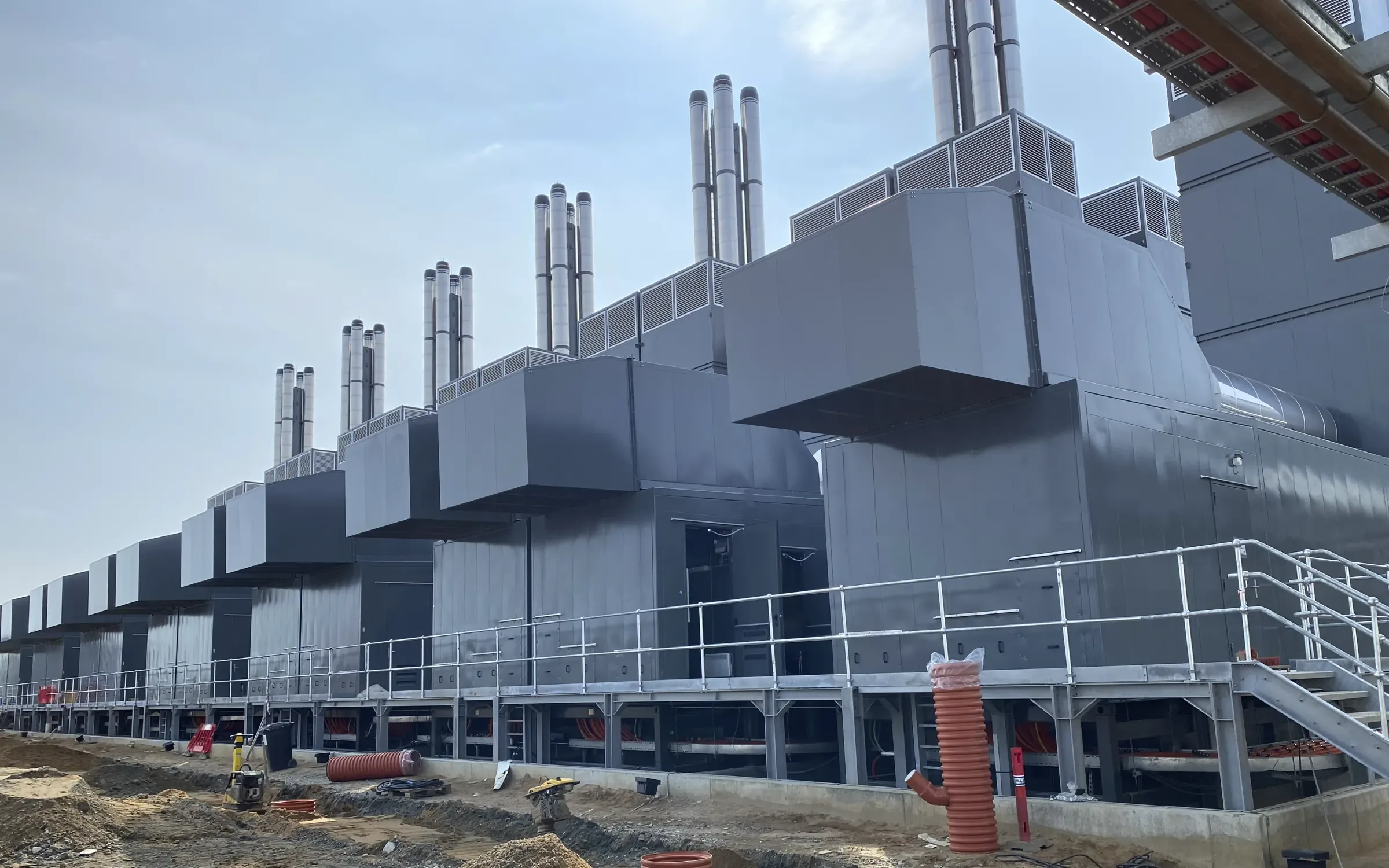
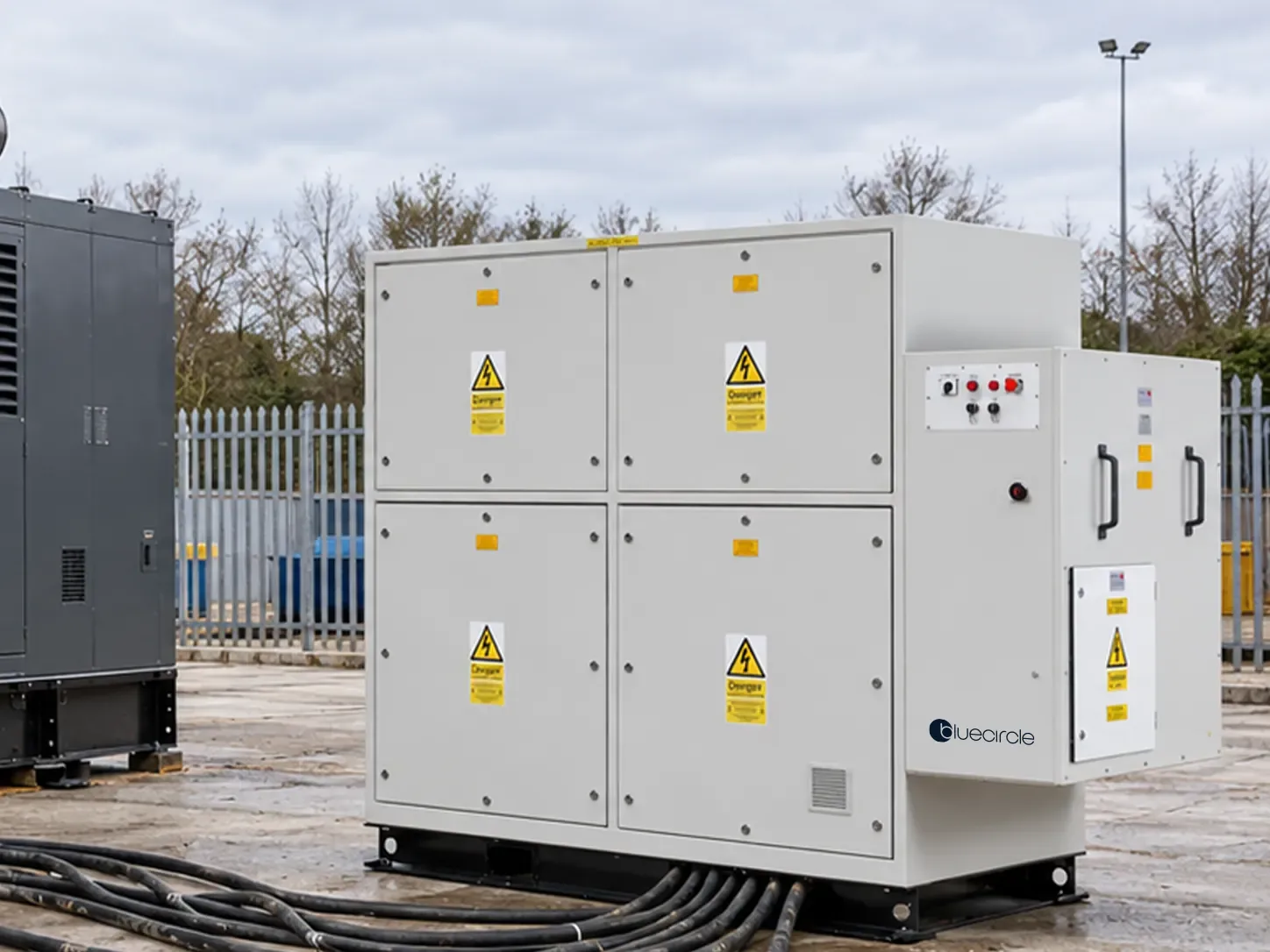
Generators are rated in kVA at a power factor of 0.8. To test the full kVA rating, we use a resistive-reactive load bank. See how we tested the MTU generator sets at a data centre in Fredericia.
Fuel
The fuel ages while the generator waits
Diesel to EN 590 may contain up to 7 % biodiesel (FAME). FAME attracts water, and in the water at the bottom of the tank, bacteria and fungi can grow and form sludge. HVO to EN 15940 is free of FAME and far more stable in long-term storage. That is why we take the sample from the bottom of the tank, where the problems start.
| Diesel (EN 590) | HVO (EN 15940) | |
|---|---|---|
| Biodiesel (FAME) | Up to 7 % | None |
| Absorbs water | Yes, FAME attracts water | No |
| Risk of bacterial growth in long-term storage | High | Low |
| What we do | Annual analysis and polishing when the analysis shows water, sludge or bacteria | Analysis, especially if the tank has also held diesel |
Rules and documentation
What you must be able to document
A standby power system must both work and be documented – to the municipality, the auditors and the insurer. The agreement ensures that measurements and running hours are recorded at every visit.
| Requirement and basis | What it means | How it is covered in the agreement |
|---|---|---|
| Danish Executive Order no. 1408 of 27/11/2023 (environmental requirements for medium combustion plants) | Applies to engines with a rated thermal input of 1–50 MW. The plant must be notified to the municipality. Emergency plants running no more than 500 hours a year are exempt from the emission limit values – as a rolling average over three years for new and five years for existing plants. | We log the running hours at every visit, so you can document them. |
| ISO 8528-6:2023 | The international standard for test methods for generating sets driven by reciprocating internal combustion engines. | The basis for our load bank tests and test reports. |
| Your business continuity plan | Defines how long the generator must be able to run and how quickly it must be back after a fault. | Determines the tank size, SLA level and number of services. |
It is the rated thermal input – the fuel energy per hour – that decides whether the plant is covered, not the generator's kVA. Read more about how the business continuity plan sets the requirements for standby power.
My page
All documentation on your own page
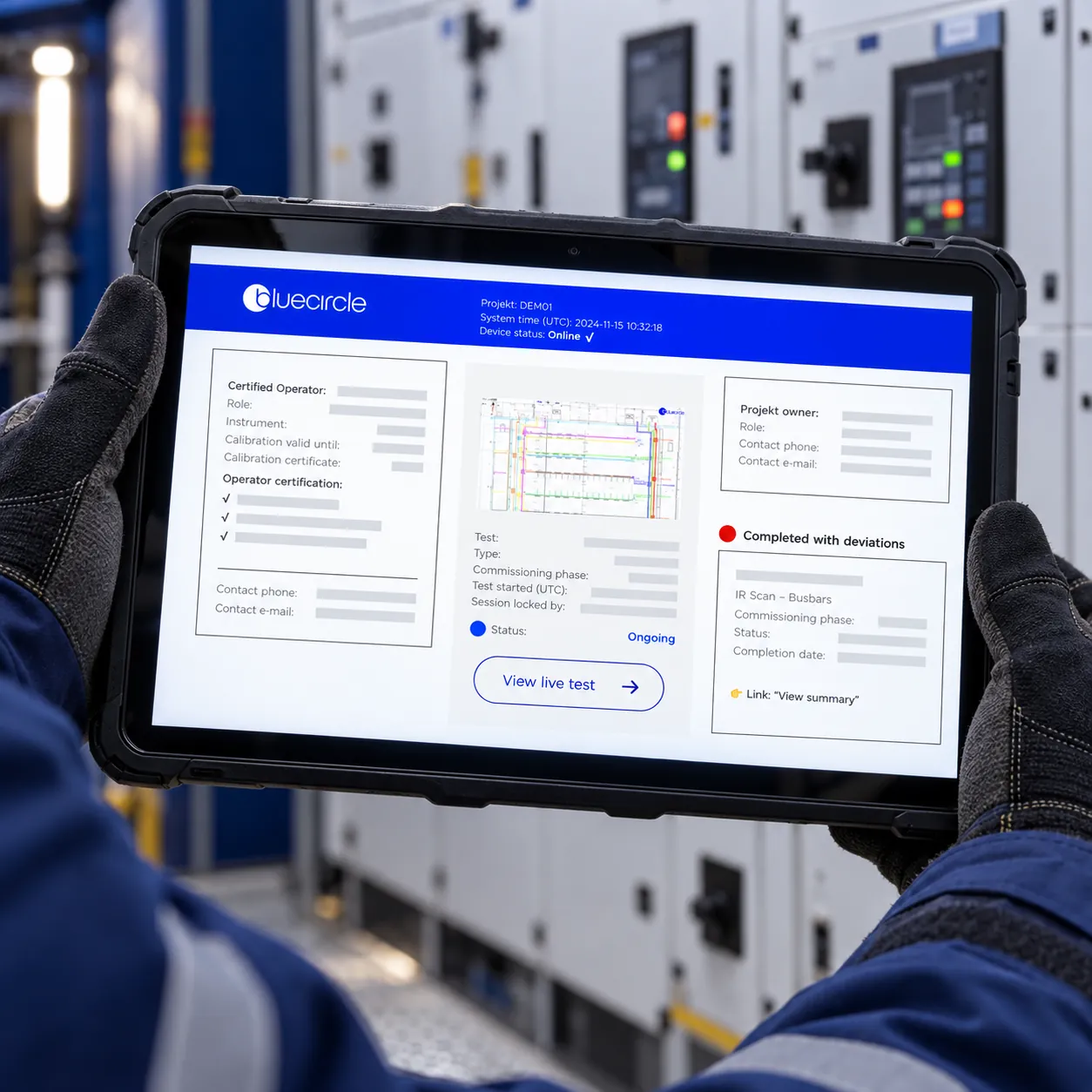
Reports, running hours, calendar and contract for your generators are on My page – together with your UPS systems if we also service them.
- Service reports and test reportsServices, load bank tests and analyses in one place.
- Running hoursRead at every visit, so you always have the figures ready.
- CalendarPlanned visits with an e-mail reminder the day before.
- Contract and pricesYour agreement and your own prices – and requests for changes.
Generator and UPS
One chain, one service agreement
A generator is not ready the moment the mains is lost. Until it has started and taken over the load, the UPS batteries keep operations running. If one link fails, the other does not help. At Bluecircle, generator and UPS can be combined under the same SLA and the same My page.
The UPS autonomy must at least cover the generator's start and transfer – with a margin for an extra start attempt. See the UPS service plans.
FAQ
Frequently asked questions
What does a service agreement for a generator set cost?
The price depends on the generator size, SLA level, number of visits and add-ons. As a customer, you see your own prices on My page and can build the agreement there. If you are not yet a customer, we send a quote based on your choices in the contract builder.
How often does a generator set need servicing?
At least one major service a year. For critical operations, we also recommend an intermediate service, so the set is inspected twice a year, and an annual load bank test. If the set runs many hours, oil and filters are changed according to the manufacturer's running-hour interval.
Isn't a weekly test start enough?
A test start without load shows that the engine starts, but not that the generator can deliver its output. If the engine often runs without load, wet stacking occurs. A load bank test verifies the output and burns off the deposits.
Does the set need an inspection before the agreement starts?
It may be a precondition that we first carry out a service and make sure the set is in good working order. This does not apply to new sets.
Can the generator and UPS system be in the same agreement?
Yes. You get one contact, the same response time and all documentation for both systems on My page.
How long does the agreement run?
The agreement runs for 12 months and is automatically extended by the same period. It can be terminated in writing no later than 3 months before expiry.
How do we get access to My page?
We create your contact persons. They log in with their e-mail and a one-time code and receive an e-mail when there is something new on the page.
Get started
Get a service agreement that keeps the generator ready
Tell us about the set, its size and your uptime requirements. We propose an SLA level and add-ons and send a quote. If you have a generator that will not start, call our 24-hour service line.
24-hour service: +45 7012 1317